Learn Spanish & Volunteer
VOLUNTEERING IN COSTA RICA
First learn Spanish, then get involved!
Looking for a way to get involved in more than just language immersion? There are many projects in Costa Rica that need help, and we can connect you with them. We partner with many different local projects and are happy to be your point of connection in Costa Rica. However, before you embark on a service-learning adventure, you need to be aware of some of the very real challenges involved in volunteering with a local organization. You will not have a dedicated, on-site coordinator from your home country; you will not necessarily be with a group of other volunteers; and you may not find yourself “saving the world” as you imagined it. You might perform only the everyday tasks common to any non-profit, from cleaning and maintenance to administrative and construction work. If you are set on setting baby turtles free or nursing a monkey rescued from trafficking, there are tours where you can be sure to do this. In volunteering, in contrast, nothing is guaranteed! It is about doing whatever needs to be done, because you believe in the mission of the organization.
Volunteer in Costa Rica with Sea Turtles
VOLUNTEER OPPORTUNITIES
Osa Peninsula Project
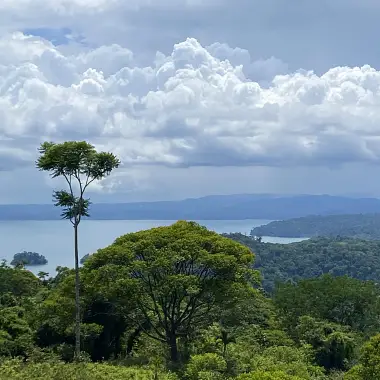
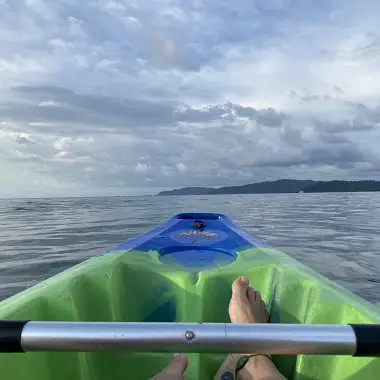
Work for the Corcovado Foundation, whose mission includes Community Outreach & Education, Regenerative Agriculture and Environmental Protection programs, in one of the most bio-diverse eco-systems in the world. You will assist in projects, teach, do daily cleaning and maintenance, and work with rural communities, and you will live in a welcoming hostel within biking distance of the beautiful Drake Bay beach. You will have free time to explore with your local hosts, taking a tour of Corcovado National Park, kayaking in the river and ocean, hiking, or just hanging out in a hammock under a palm tree by the ocean! Corcovado has been named by National Geographic as “the most biologically intense place in the world”, and to experience it is the opportunity of a lifetime.
Before you decide to volunteer, read this testimonial (and cautionary tale!) from one of our own staff members!
“Volunteering in Costa Rica may be a very different experience than what you expect. Our volunteer programs are a non-profit branch of our school, and are all managed directly with the local project coordinators, meaning there is not an Intercultura staff member at every project, just at our Heredia school campus. On the plus side, it is much cheaper than going through an international organization that has staff accompanying groups of volunteers to every destination. However, it also means there is not the level of on-site orientation, organization, training or supervision that more expensive, international service-learning programs might offer.
What this means for volunteers is that you must expect the unexpected, which might include any number of changes or differences from what you ideally wished for, for example:
- You signed up to teach at a kindergarten, but there is an unexpected teacher’s strike while you are there, meaning you will have to do something else, like substituting for a class or doing games and activities that you must come up with on the spot. Or you might be reassigned to do other tasks at the school, like making materials, games, etc for future classes. Or perhaps they need to sand and varnish the desks, and will ask volunteers to do this while the kids are not at school.
- While working at a wild animal rescue center, you are not allowed to touch the animals as per Costa Rican environmental law, but rather can only feed them and clean their cages. Some days, you are even asked to welcome any tourists that visit the site and possibly give them a tour of the facility.
- You asked to do field work, but the conservation center was asked to host a national sustainable-agricultural round table, which means there is no one to take you out to the actual conservation projects. You may be asked to count trees instead, or participate in activities for local children, or create a lesson plan in English and teach kids about conservation, or play soccer at the town field, or dig drainage ditches for water management systems, or rake the lodging property.
- You might be going every day to the turtle project in the organization’s pick-up truck, which then breaks down one day, and you have to walk an hour to the project, or you must be willing to do whatever else the organization may need (maintenance, signage, cleaning) or maybe the camp coordinator is on their day off, and you will have to look for ideas for projects and take the lead on getting them started. Worst case scenario, take the day off and explore the area!
- Perhaps you were hoping to be at a project with lots of other volunteers who speak your language, but when you arrive it is just you and one other volunteer from a different country and communication is hard. You are forced to rely on the little Spanish you know and look for the project staff or go outside the project and seek out locals to talk to and make friends with. Or, you can choose to spend some alone time reading, watching films, learning something online, or doing any other projects you enjoy.
A personal experience from one of our own staff members provides a perfect example of how expectations are – or are not- met. Here is her story:

Study Spanish and volunteer at our beach campus in Sámara
Middle & High-schools, Colleges & Universities, and Special-Interest Groups
If you are interested in less structured volunteering or only wish to study at the beach campus, you can inquire after arrival about opportunities that may arise while you are here, such as: beach & town cleanups; adoption events at the local humane society; kids camps, etc.
These options cannot be pre-booked, as they vary throughout the year depending on what is going on in the Sámara community at any given time.
Volunteers walking back to school after fixing up the local community sports field in Sámara.

“I sure did enjoy my time. And I learned more than Spanish. I learned that people care about people and love to support. I have learned how to contribute. Thank you!”
Ryan Anderson, Campus Maintenance Volunteer

WOULD LIKE TO HAVE MORE INFORMATION ABOUT OUR VOLUNTEER PROJECTS? SEND US A MESSAGE!
Sea Turtles – Hatching Season in Costa Rica
VOLUNTEERING WITH ANIMALS & NATURE
Wildlife and Conservation
Work at a turtle refuge, national park or animal rescue center. We have several placements around the country, many offered year-round.
Experience Costa Rican nature by working and living in a remote but beautiful area, where accommodations are simple, the work challenging, and the opportunities for socio-environmental learning experiences plentiful. Remember, you will not be able to pick and choose your tasks, as volunteering requires giving back however you are asked to do so, for the benefit of your chosen community. You will learn a lot about yourself, your expectations and what it truly means to help, and it will most likely not be easy. Talk to us to find out if volunteering is right for you, and which placement may be most suitable.
Please read this recent testimonial from one of our turtle refuge volunteers!
Dear Annia,
Thank you so much for your message! I hope you are doing well. My experience with them was overall really nice. There were a lot of other young volunteers and we also got to know a lot of other people from the village. As you already told us, there was not a huge workload during those weeks (mostly repairing and preparing the hatchery), and we could explore the region with the other volunteers which was really nice too. Because we were so few volunteers we also interacted a lot with the coordinators and they taught us about turtles and the climate/environment in Costa Rica (the other volunteers told us that during the high season when a lot of volunteers are present this doesn’t happen often, so we were quite lucky). The only downside really was the accommodation …which we were already a bit prepared about because you told us we shouldn’t expect too much but still we had to get used to the fact that we cleaned almost every day and the rooms were still dirty because they were open. But because we spent so much time outside it also wasn’t that big of a problem. The food was actually pretty good and we could also help in the kitchen but the problem was that sometimes the coordinators forgot to order the supplies so we had to go and eat somewhere else … But overall it was a really nice experience (even though we didn’t see any turtles) and we got to know a lot of other nice people from all over the world and locals ☺️.
Charlotte Hirschi (Montezuma volunteer, 2025
There are several things which will help you have a more meaningful and rewarding experience, and increased interaction within your placement. Read our blog post about three aspects everyone should know before deciding to volunteer abroad. This might help you with your decision.
MORE FACTS TO KNOW ABOUT VOLUNTEERING IN COSTA RICA
Volunteer placements are based all around the country, many in rural areas and some closer to the cities. Students may study Spanish at either campus before volunteering, but must include at least one week in Heredia prior to beginning the volunteer program, in order to receive complete orientation as well as preparation and details for travel to their placement.
MINIMUM AGE
18
yrs
YOUR SPANISH SKILLS
The volunteers’ Spanish level is an essential factor to ensure a successful experience. To ensure the volunteers´ Spanish level is good enough to communicate and understand the instructions during the project a minimum number of weeks of classes must be taken. An Intermediate or Advanced Spanish level greatly facilitates training and interaction. At the very minimum, we require a high beginner level to start volunteering (which you can acquire after four weeks of classes if you start in our first level). Depending on the type of project you are going to do, we recommend a different length of your Spanish program. In addition, before signing up, please reflect on the following considerations, such as:
ADDITIONAL SKILLS
The concrete and communicable skills you bring to the position that make you a valuable resource to the organization. For example: teaching certification or license, construction experience, advanced professional degrees, experience teaching technology, sports, arts & crafts, music, photography or other short-term skills, library management, community development experience, social media or web management, etc. If you do not have any concrete skills, you can of course still participate, but your expectations regarding what you will contribute should be adjusted accordingly.
TIME COMMITMENT AND ENGAGEMENT
The longer you can stay the better. This helps to justify the significant investment in time and human resources that is required to train volunteers. Your willingness to learn and work hard in any and all areas that need help is crucial. Once you commit, you need to fulfil your obligations just as you would in a paid working position. If you leave early, you will have created more work for the organization, harming them rather than helping them. This will reflect badly on you, your own culture and the volunteers that follow you.
DIFFERENT COUNTRY, DIFFERENT CULTURE
Understand that you are interacting in a different culture and that your expectations are based on what you are used to seeing and experiencing in your own culture. Open-mindedness is key to developing a good relationship with the people in the placement. Do not expect constant supervision and direct instructions on what to do; this is not the norm in Costa Rican organizational culture. Remember you are here to learn and to contribute, and that many organizations have scarce personnel resources. You will be expected to take the initiative often, devise your own activities if need to be, and join in to work on whatever task is at hand, with a positive, upbeat attitude.
VOLUNTEERING PRICING
One-time $99 USD placement fee
Lodging depends on the volunteering program chosen. See rates for our student residence and homestay families here.
Learn more about our Community Commitment and how we make an Impact!
FREQUENTLY ASKED QUESTIONS
Can I volunteer anywhere in Costa Rica, or only near Intercultura's campuses?
You are not limited to Heredia or Sámara! Volunteer opportunities are available throughout Costa Rica, including the Central Valley, Guanacaste, the Pacific and Caribbean coasts, and rural communities. You can explore options in different parts of the country according to your interests and travel plans. You must study Spanish at Intercultura for at least two weeks before volunteering, and at least one of those weeks must be at our Heredia campus. There you will receive your volunteer orientation, full placement details, and all the information you need to begin your program.
How long can I volunteer for?
Volunteer placements vary in duration. Depending on the organization and project, you may be able to volunteer for one or two weeks, a month, or several months. Some organizations also welcome longer-term volunteers. Please write to us and we will provide full details on all the options.
Why do I have to pay to volunteer?
Organizing and supporting a volunteer placement involves significant costs (housing, food, project operations, staff, maintenance, materials, and other). Community organizations and non-profit projects have limited financial resources and cannot cover the additional expenses associated with hosting international volunteers. Participation fee may help cover accommodation, meals, transportation, project materials, local coordination, supervision and administrative expenses. In some cases, it also contributes directly to supporting the activities of the host organization.
What happens if I don't like my placement and want to quit?
We require students to share their interests, expectations and preferences with us before confirming a volunteer placement so that we can help find an opportunity that is a good fit. If you experience difficulties or feel that your placement is not what you expected, we encourage you to contact us so that we can discuss the situation and try to resolve it. Unless there is wrongdoing on the organization’s part, they will usually not grant a refund, as these resources have been allocated and other volunteers refused in order to reserve your space. We therefore recommend carefully reviewing the placement details and requirements before making your final commitment. If in doubt, sign up for just one week if the placement allows, and then decide whether or not to continue (space permitting). Volunteering is a serious committment requiring adjustment to challenging conditions, so please think it through and read all the details on our website before committing.
Do I need to speak advanced Spanish?
Not necessarily! Some organizations welcome volunteers with basic Spanish, while others require an intermediate or advanced level. Previous experience or specific qualifications may be necessary for certain placements, particularly in healthcare and specialized projects. Your Spanish classes at Intercultura will give you a great foundation for communicating with local communities, and the more weeks you can study, the quicker you will be able to integrate and adapt at your placement.
Who will the other volunteers be and what are the living conditions like?
This varies considerably from one organization to another. Some projects have several international volunteers working together, while others may have only one or two volunteers at a time. In some placements, you may be working alongside local staff and community members rather than other international volunteers. Many volunteers are between 18-30, but there are also professionals and retirees: all ages mix together and new friendships come in all shapes and sizes. Accommodation is often basic and usually shared. Depending on the project, you may share a room with anywhere from two to eight people. Privacy and personal space may be limited, and facilities may be considerably more modest than what you are accustomed to.
What will I be doing?
It is important to understand that volunteering is not always glamorous! Much of the work involves practical, everyday tasks that simply need to be done. You may find yourself cleaning, preparing materials, organizing supplies, helping with maintenance, doing errands or assisting wherever an extra pair of hands is needed. Some tasks may be repetitive or physically demanding. The most important qualities of a good volunteer are flexibility, patience, initiative and a willingness to pitch in. You do not need to have specialized skills to make a valuable contribution. In fact, when your Spanish is still developing and you have limited experience, being willing to help with practical tasks is often where you can be most useful. Come with an open mind, realistic expectations and a willingness to adapt. The experience may not always be comfortable, but it can be incredibly rewarding, and it will definitely broaden your horizons and your understanding of the world, and yourself!
Are volunteer placements inclusive and open to everyone?
Yes! Intercultura and our partners are committed to diversity, inclusion and equal opportunities. We work with organizations that welcome volunteers without discrimination or prejudice based on age, race, ethnicity, nationality, religion, sex, sexual orientation, gender identity, physical abilities or any other personal characteristic. We believe that volunteering should be an opportunity for people from different backgrounds and walks of life to contribute, learn from one another and build meaningful connections with local communities. Individual placements may have specific requirements related to age, skills or physical abilities, depending on the nature of the work, but we aim to help everyone find an opportunity that is appropriate for them.
Want to be the first one to know about new program opportunities, special rates or Costa Rica insights?
First time email subscribers get a 10% off their Spanish program.